

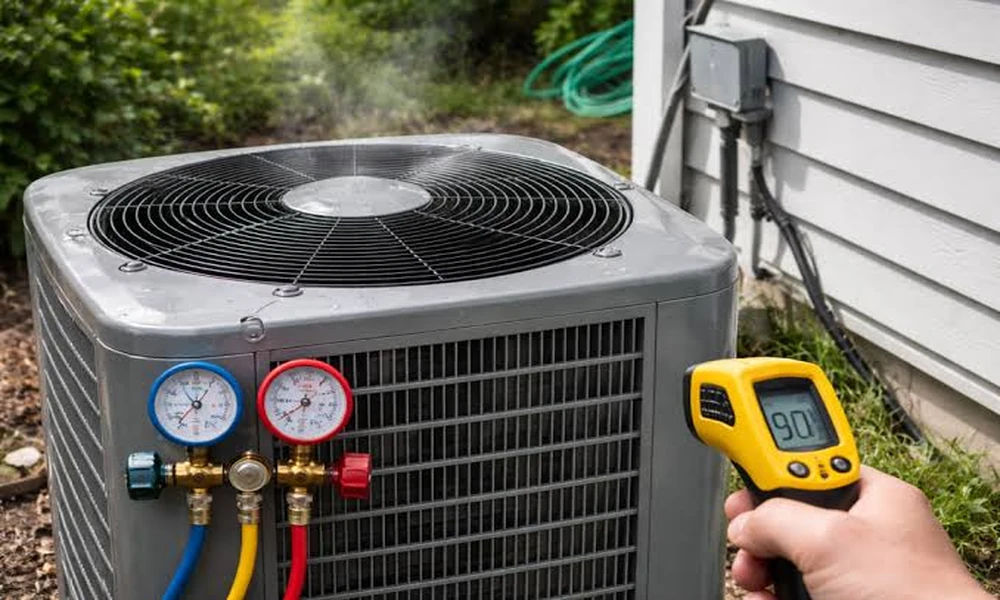
Anyone who has lived through a Central Florida August knows this feeling. The thermostat reads 74, the system has been running since breakfast, and the couch cushions still feel slightly damp. The bathroom mirror stays fogged long after a shower. Most people turn the temperature down another few degrees. The house gets colder and the power bill goes up, but the clammy feeling stays.
That’s because the problem usually isn’t temperature. In towns built around spring fed rivers and lakes, the outdoor air carries heavy moisture for most of the year, and your cooling system is the main thing keeping that moisture out of your drywall, closets and furniture. Rainbow Lakes AC is the kind of local outfit that has been dealing with this climate since 1978. It’s run by the same family out of Dunnellon, works on every major equipment brand, and treats indoor air quality as part of the job rather than an add-on. Any technician with that much time in this region will tell you a sticky house is rarely about a broken part.
Cold Air and Dry Air Are Two Different Jobs
An air conditioner does two things at once. It lowers the temperature, and it pulls water out of the air. The second part happens at the evaporator coil inside your air handler. Warm indoor air passes over that freezing cold coil, the moisture condenses into droplets, and the water runs into a pan and out through a drain line.
That process needs time. During the first few minutes of each cycle the system is mostly chilling the coil itself, and real moisture removal only starts once the coil is fully cold and dripping. Any condition that keeps the coil from reaching that point will leave you with a cool house that still feels damp.
The target is worth knowing. The EPA recommends keeping indoor humidity below 60 percent, ideally somewhere between 30 and 50. Above that range you start to notice musty closets, mildew on leather shoes and belts, and the kind of smell that settles into a guest room nobody uses. An inexpensive digital hygrometer from a hardware store will show you where your home actually sits.
When a Bigger Unit Makes Things Worse
Many people assume a more powerful system cools better. In a humid climate, a system that’s too large for the house often does the opposite. It cools the rooms quickly, hits the thermostat setting, and shuts off before the coil has done much drying. This is called short cycling, and it’s one of the most common reasons a Florida home feels cold but clammy.
Older installs were often sized with a loose rule of so many square feet per ton. A proper load calculation, known in the trade as Manual J, looks at insulation, window area, shading, the direction the house faces and how many people live there. There’s also a less obvious trap. A home that has gained new windows, extra attic insulation or a better roof since the original install may now be oversized for equipment that once fit it well.
If your system turns on and off every few minutes on a hot afternoon, mention it the next time someone services the unit.
The Fan Setting Most People Ignore
Look at your thermostat. If the fan is set to ON instead of AUTO, the blower keeps running between cooling cycles. That sounds harmless, but once the compressor stops, the coil is still wet. The moving air picks that water back up and pushes it right back into your living space.
Switching to AUTO is the cheapest humidity fix there is. Many newer thermostats also include a dehumidify mode that slows the blower so air spends more time over the coil. That small change can make a noticeable difference in how a room feels at the same temperature.
Leaks You Can’t See From the Hallway
Most Florida homes have ductwork running through the attic, where summer temperatures climb far above anything you’d feel outside. A loose connection on the return side of the system pulls that hot, damp attic air straight into your home. Gaps around the air handler closet, crushed flexible duct and unsealed return boxes all do the same thing.
Because the leak is hidden, homeowners tend to blame the equipment. A technician can usually find these spots with a flashlight and some patience, and sealing them with mastic often solves comfort complaints that years of lowering the thermostat never did.
Moisture also comes from inside the house. Bathroom exhaust fans that vent into the attic instead of outdoors, a dryer vent with a gap, or a kitchen with no range hood all add water that your cooling system then has to remove.
A Few Habits Worth Building This Week
Some of the best humidity control happens in small routines rather than big purchases.
- Check the condensate drain line where it exits the house. On a muggy afternoon it should drip steadily. No drip at all can mean a clog building up.
- Ask your technician whether flushing the drain line with white vinegar every few months suits your setup. Algae growth in that line is a leading cause of shutdowns and ceiling stains.
- Replace the filter on schedule. A clogged filter restricts airflow, which can freeze the coil and shut down moisture removal completely.
- If you leave for part of the year, don’t turn the system off or set it very high. A moderate setting, or a dehumidifier set to a target level, protects the house from mold while you’re gone.
Newer Equipment Is Changing the Math
If replacement is on the horizon, the options look quite different from ten years ago. Variable speed and inverter driven systems can run at low capacity for long stretches instead of blasting on and off. That longer, gentler run time is exactly what a humid climate needs, and homeowners often find they’re comfortable at a higher setting.
Whole home dehumidifiers that tie into existing ductwork have also become more common in Florida, especially in tightly sealed newer homes where fresh air needs to be brought in and dried. Many smart thermostats now display indoor humidity next to temperature, so you can see both numbers that actually determine comfort.
Refrigerants are shifting too. New residential systems are moving to lower impact refrigerants such as R-454B and R-32 under the federal phase down, while existing R-410A systems can still be serviced. If your current unit is aging and needs a major repair, that context is worth weighing before you commit to a big spend on older equipment.
Comfort Is Measured in Two Numbers
The real takeaway is that a comfortable home in a lake and spring country climate depends as much on humidity as on temperature. A house held at 50 percent humidity can feel pleasant at 77 degrees, while the same house at 65 percent feels sticky at 72. Once you start watching both numbers, problems that seemed random become easy to explain, and the solutions often turn out simpler and cheaper than a colder thermostat setting.
