

Most homeowners in central North Dakota find out their roof is damaged on the same day they find out their claim was denied. That’s the part that stings. You hear the hail hit, you see the dented gutters, you call your agent, and months later you’re staring at a settlement that barely covers a patch job on a roof that needed replacing.
That gap between what you think your policy covers and what it actually pays comes down to a few very specific things: the age of your roof, how the damage is documented, and whether the person inspecting it actually understands what a spring storm does to asphalt in this part of the country. That last part matters more than people realize.
What Hail Actually Does to a Roof Up Here
North Dakota sits squarely in the middle of what meteorologists call Hail Alley, a stretch of the northern plains where the combination of warm surface air and cold upper atmosphere produces some of the largest hailstones in North America. According to the National Weather Service, the region consistently records more severe hail reports per year than almost anywhere else in the country.
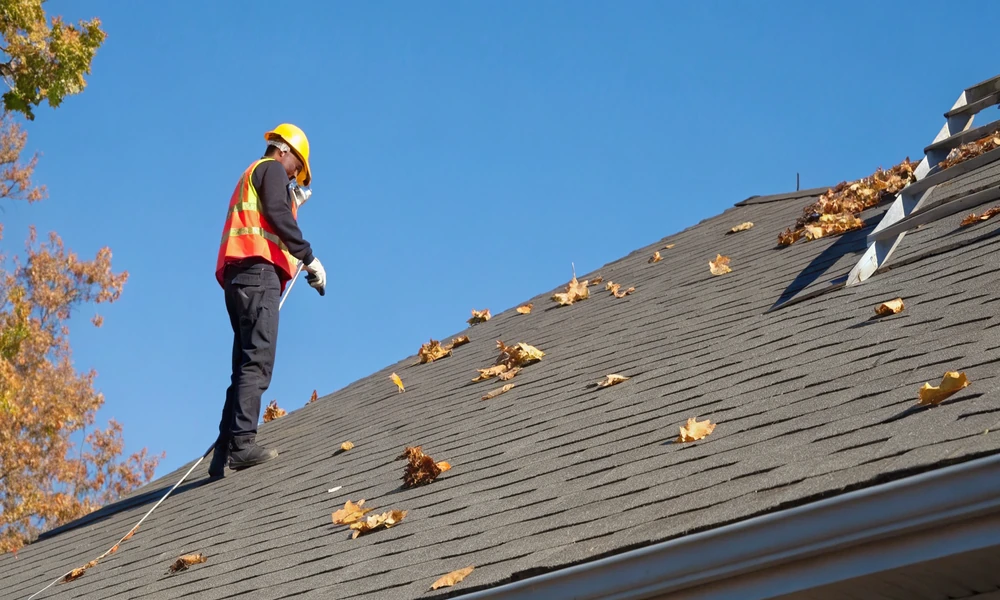
So what does that mean for the shingles on your house? A golf ball sized stone doesn’t put a clean hole through asphalt. It bruises the mat underneath and knocks the protective granules loose. From the ground, that shingle still looks fine. From six feet up on a ladder, you can usually see the spots where the granules are gone and the dark mat is showing through.
That bruising is the whole ballgame. Once the mat is compromised, water gets in, freezes, expands, and starts pulling the shingle apart from the inside. You might not see a leak for two or three winters. By then, the damage is old enough that your insurer can argue it’s wear and tear, not a covered event.
I’ve walked roofs in Mandan after a June storm where the north slope was shredded and the south slope was untouched. Wind direction decides which side takes the hit. If your adjuster only checks one slope, you’re leaving money on the table.
How the Claims Process Really Works
Filing a hail claim is not the same as filing a claim for a tree that fell on your house. It’s a negotiation, and the insurance company has people who do this every single day.
Here’s the order most homeowners should follow, based on what I’ve seen work and what I’ve seen fall apart:
- Document before you touch anything. Photograph the dents in your gutters, downspouts, vents, and any metal flashing before you replace them. Those soft metal surfaces are the clearest proof a storm hit your property, and once they’re gone, your evidence is gone.
- Note the storm date. Insurers have filing windows, and many policies require you to report damage within a set period. Look up the specific date your area got hit and put it in your claim.
- Get an independent inspection. You want someone who has no financial relationship with your insurance company to come out, get on the roof, and write down what they find.
- Be present for the adjuster’s visit. You’re allowed to be there. Ask questions. Point at the spots your contractor marked. Adjusters are human, and a homeowner who knows what they’re looking at tends to get a more careful inspection.
- Review the scope of loss line by line. This is the document that lists what the insurer will pay for. Missing line items are the single most common reason claims come in low.
The scope of loss is where you need to focus. It should cover tear-off, decking replacement if the plywood is compromised, underlayment, flashing, ridge vent, and labor. If your paperwork lists shingles and nails but nothing else, push back.
Most states, including North Dakota, have consumer protection rules around how insurers must communicate claim decisions. The general rules for property claims are widely published, and knowing them gives you a leg to stand on when a claim gets denied without a clear reason.
Why Local Knowledge Changes Everything
A contractor from a metro area three states away can install a fine roof. What they can’t do is tell you which slopes on your street catch the worst of a northwest wind, or which neighborhoods got hammered in a storm that never made the evening news.
That’s why working with a roofing company in Central North Dakota tends to produce a different outcome than hiring whoever knocked on your door after the storm. Local crews know the building codes here, they know which suppliers can get materials delivered before the next front moves through, and they know how to talk to the regional adjusters who handle most of the claims in this area. That last one sounds small. It isn’t.
Insurance work in this region also moves on a seasonal clock. You’ve got maybe six months of reliable weather to get a roof installed, and hail season overlaps with the busiest stretch for every crew within a hundred miles. Homeowners who wait until August to start the process often end up with a tarp and a long winter.
Here’s my honest take: if your roof is more than fifteen years old and you just took a significant hail hit, repair is usually the wrong call. You’ll spend real money patching shingles that will fail again in two years, and you’ll burn the one claim you’ve got on a fix that doesn’t solve the problem.
Choosing a Contractor Without Getting Burned
Storm chasing is a real industry, and it shows up in North Dakota every spring. Trucks with out of state plates, guys who promise to handle your whole claim, and a business card with a phone number that stops working in October.
Use these checks before you sign anything:
- Ask for a physical local address, not just a phone number.
- Confirm they carry liability insurance and workers compensation coverage.
- Get the manufacturer’s warranty terms in writing, and know whether it covers labor.
- Never pay the full amount upfront. A reasonable deposit and payments tied to milestones is normal.
- Read the contract for a clause that assigns your claim rights to the contractor. Some states have moved to restrict these. You want to keep control of your own claim.
North Dakota’s state government portal is a reasonable place to start checking licensing and business registration, and the Secretary of State’s office can tell you how long a company has actually been operating under its current name. Ten minutes of homework beats a five figure mistake.
One more thing worth knowing: you are not required to use the contractor your insurer suggests. That recommendation is convenient for them, not necessarily good for you. Get two or three bids, compare the scopes, and pick the crew you’d want on your roof if something went wrong next spring.
The Long Game
Hail is going to keep falling on this part of the country. There’s no version of homeownership in central North Dakota where you skip that conversation entirely. What you control is how prepared you are when it happens: the photos you took last week, the contractor whose number is already in your phone, the policy you actually read instead of skimmed.
If a storm just rolled through your neighborhood, get someone on your roof this week. Not next month. Damage that looks cosmetic in July has a way of turning into a ceiling stain by February, and by then you’re paying for it yourself.
