

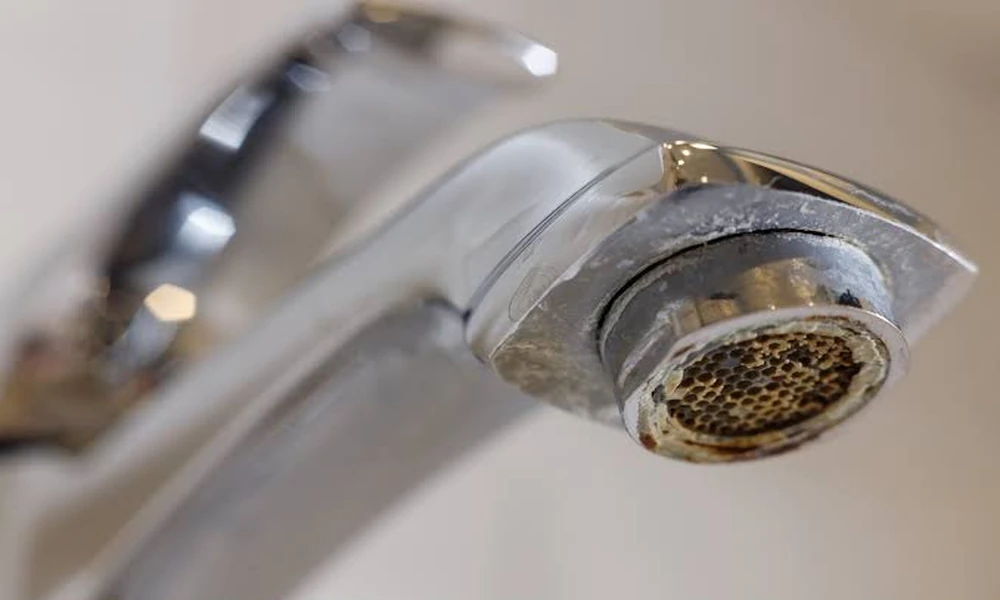
Fifteen grand. That is roughly what one commercial kitchen in a hard water town can burn through in a year replacing a single kill-on-sight issue: triple failures on the same dishwasher heating element, then the solenoid valves, then the booster pump. Nobody put “scale damage” on the P&L. It just showed up as maintenance, over and over, until someone finally tested the water.
If you run a farm, a laundry, a grocery store, or a hotel with a few hundred fixtures behind the walls, your water is either working for you or quietly taxing every piece of equipment you own. The fix is not mysterious. It starts with knowing what is actually in the water coming off your line, and then matching treatment to the way you use it, which is why operators who plan this out usually start by pricing water treatment for farms and facilities against the equipment failures they are already paying for.
This piece walks you through where the money leaks out, what each treatment technology actually does, and a simple way to scope a system you will not regret in two years. I’ll tell you which option I’d pick in the most common case, because the honest answer is boring and the boring answer saves the most money.
Where hard water quietly sends you the bill
Calcium and magnesium are the usual culprits in municipal and well supplies. They love heat, which is why the damage concentrates anywhere water gets warm. Scale builds a rock-hard layer inside your hot water tank, on heating elements, in dish machine booster heaters, and across the inside of every steam line you own. That layer insulates metal from water, so the heater works harder, pulls more energy, and dies younger.
On a farm, the problems stack up differently. Mineral-heavy water can throw off sprayer mix rates, leave residue on produce in packing lines, and shorten the life of pressure washers and irrigation components. On the facility side, laundries see soap demand spike and linens come out stiff and gray. Grocery stores fight haze on produce misters and clouding on glass doors. None of those look like a water problem on a spreadsheet, so nobody fixes them.
According to the Environmental Protection Agency, roughly nine in ten Americans get drinking water from community water systems, which means most facilities are on a treated municipal supply. That matters because people assume treated water is problem-free water. It is not. The EPA regulates contaminants with health implications. Hardness is not one of them, so your municipality has no obligation to soften what it delivers.
Match the treatment to the job, not the marketing sheet
Water treatment is not one product. It’s a small family of technologies, and picking the wrong one is how people end up with a system that does nothing for their actual problem. Here is how the main options break down for a commercial operation.
| Technology | Best for | What it actually removes |
|---|---|---|
| Water softener | Hot water, dish machines, laundry, boilers | Calcium and magnesium (hardness minerals) |
| Reverse osmosis | Kitchen drinking stations, ice, coffee, food prep | Most dissolved minerals and a wide range of contaminants |
| Filtration | Sediment, chlorine taste and odor, particulate | Suspended particles and chlorine |
| Deionization | Car washes, labs, spot-free rinse applications | Dissolved mineral ions, leaving high-purity water |
| Problem water systems | Iron, sulfur odor, unusual well chemistry | Specific contaminants identified by testing |
Softening is the workhorse. It’s not glamorous, but it protects every piece of hot water equipment downstream of it, and that’s where most of your capital lives. That’s my pick for the majority of facilities and farms, before anything fancier gets discussed. Deionized water is a different conversation, mostly for car washes and labs where spot-free or high-purity water is the whole point, and if that’s you, the specs matter more than the brand.
One standard worth asking about when you evaluate equipment: NSF International publishes the certification standards that many water treatment products are tested against. A certification stamp doesn’t guarantee the system fits your building, but it does tell you someone independent looked at the materials and how the unit performs. I’d push any vendor who shrugs at that question.
Scope it in four steps before anyone quotes you
Vendors can size a system in an afternoon if you hand them the right inputs. Without those inputs, they’re guessing, and you’re paying for the guess. Here’s the sequence I’d run.
- Test the raw water, twice. Once from a tap at the building, once from the source if you’re on a private well. Well chemistry can shift seasonally, so a second sample a few months apart reveals a range instead of a snapshot.
- Map your peak flow. Not your average. Look at the hour your dish machine, laundry, and irrigation are all pulling at once, then size to that number. Undersized systems fail exactly when you need them.
- Count the equipment at risk. Boilers, booster heaters, steam tables, ice machines, laundry washers, packing line rinse stations. Every one of those is a downstream cost if the water stays hard.
- Set a budget against failure cost. Add up last year’s descaling, chemical spend, and early equipment replacements. That number is your benchmark. A treatment system that lands under it is paying for itself, and that’s the only comparison that matters.
Do that homework and you’ll get sharper quotes, plus you’ll spot the moment a salesperson starts selling a solution to a problem your test results don’t show.
The mistakes that cost the most
The single most expensive error I see is skipping the test and buying on a neighbor’s recommendation. Two buildings on the same street can sit on different water chemistry, especially on private wells, and a system tuned for one can be useless in the other. Second is neglecting maintenance. Softeners need salt, filters need changing, and membranes need care. A system nobody services turns into a piece of furniture with a power cord.
The third mistake is treating water as a line item instead of an operating input. If you run a food operation, water quality touches product consistency on every single shift, and a surprising share of the food service workforce is in kitchens where water quality drives the output. The Bureau of Labor Statistics tracks how large that food preparation and serving workforce is, and every one of those operations has a water supply feeding its equipment. Think about what scale does across that footprint, and it gets very hard to call water treatment optional.
A thought before your next maintenance review
Water is the one utility you use every hour and almost never audit. Testing costs you an afternoon and a modest fee. Ignoring it costs you a slow, steady bleed through heating elements, chemical overspend, and shortened equipment life that never gets attributed to the water at all. The math only becomes obvious when you line the two side by side.
So start there this quarter. Pull a sample, log your peak flow, and count the equipment at risk. If the test comes back hard and your failures look familiar, you’ll know exactly where the next dollar should go. Test first, then buy, and your equipment budget stops being someone else’s profit margin.
