

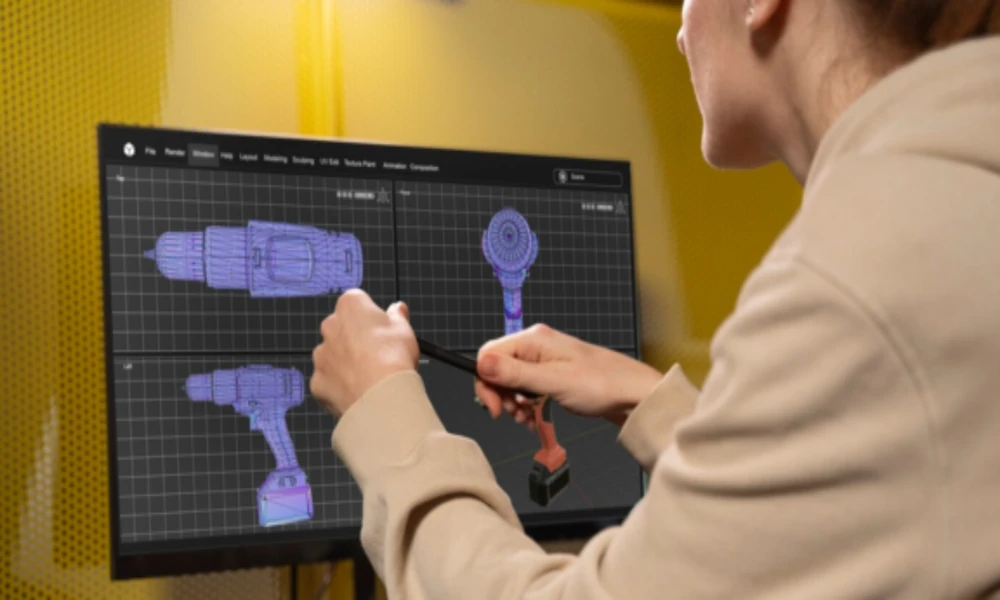
In the engineering and design industry, innovation is important for creating better, safer, and more efficient products. CFD software is one of the tools helping engineers achieve this by allowing them to study how fluids move around or through a product before it is physically built. Through computer-based simulations, engineers can test different designs, find possible problems, and make improvements early in the development process. This can save time, reduce costs, and help companies create products that perform better.
Understanding CFD and Its Role in Product Design
What Is Computational Fluid Dynamics?
Computational Fluid Dynamics (CFD) is a computer-based method used to study the movement of fluids such as air, water, oil, and gas. It uses mathematical calculations to show how fluids behave under different conditions. Engineers can use the results to understand factors such as fluid speed, pressure, temperature, turbulence, and heat movement.
Instead of building several physical models and testing each one, engineers can first create a digital model and run different simulations. This makes it easier to compare design ideas and find areas that may need improvement.
CFD is used in many industries. For example, automotive engineers can study airflow around a vehicle to reduce drag. Aerospace engineers can examine how air moves around aircraft parts. Engineers working with heating and cooling systems can also use CFD to study temperature changes and airflow.
How CFD Supports Better Design
One of the main benefits of CFD is that it gives engineers a clearer view of what may happen when a product is used. Some fluid-related problems are difficult to see with a physical model alone. A simulation can provide detailed information that helps engineers understand what is happening inside or around a design.
CFD can help with:
- Better performance: Engineers can find areas where airflow, pressure, or heat may affect product performance and make changes to improve them.
- Improved aerodynamics: CFD can help create smoother shapes that reduce air resistance. This is useful for cars, aircraft, drones, and other products that move through the air.
- Better cooling: Engineers can study how heat moves through a product and improve cooling systems for engines, machines, and electronic equipment.
- Less material use: Digital testing can help engineers find ways to achieve the needed performance without adding unnecessary weight or materials.
- Early problem detection: Potential design problems can be found before a physical prototype is made, reducing the need for repeated changes later.
Reducing Development Time and Cost
Product development can take a lot of time when every design change requires a new physical prototype. CFD helps reduce this process by allowing engineers to test many design options on a computer.
For example, an engineering team developing a new vehicle component can test several shapes and compare their airflow results. Instead of producing a physical part for every option, the team can first remove weaker designs through computer simulations. Physical prototypes can then be created based on the more suitable designs.
This approach can help companies reduce testing costs and shorten development schedules. It also gives engineers more freedom to explore different ideas without the expense of producing a physical model for every change.
Applications and Future of CFD
CFD and Fiber-Reinforced Polymers
Fiber-reinforced polymers (FRPs) are lightweight materials known for their strength and durability. They are used in areas such as aerospace, automotive engineering, construction, and motorsport.
CFD can support the design of products made with FRPs by helping engineers study how the shape and surface of a component affect airflow, heat, and other conditions. This can be especially useful when FRP parts are designed for products where weight and aerodynamic performance are important.
For example, an engineer designing a lightweight vehicle body can use CFD to study how air moves around the body. The results can help the team adjust the shape to reduce drag and improve overall performance.
CFD can also be used alongside other engineering methods to create a more complete view of how a product will perform. This allows engineers to consider both the material and the conditions the product will face during use.
CFD in Different Industries
The use of CFD is not limited to one type of product. Its ability to study fluid movement makes it useful across many industries.
In the automotive industry, CFD can be used to improve vehicle aerodynamics, engine cooling, and airflow through different vehicle systems.
In aerospace, engineers can study airflow around aircraft components and help improve aerodynamic performance.
In energy, CFD can support the design of turbines, cooling systems, and other equipment where fluid movement affects performance.
In electronics, CFD can help engineers understand heat and airflow inside equipment. This can support the design of better cooling systems and help prevent overheating.
CFD is also useful in manufacturing and industrial engineering, where engineers may need to study the movement of liquids, gases, or heat inside machines and production systems.
The Future of CFD
CFD continues to develop as computers become faster and engineering software becomes more advanced. Future CFD tools are expected to make simulations faster, easier to use, and more useful for complex engineering projects.
One important area is multi-physics simulation, where CFD can be combined with other engineering simulations. This allows engineers to study several factors at the same time, such as fluid movement, heat, and structural behavior.
Another area is AI-assisted CFD. Artificial intelligence can help engineers process simulation results, explore design options, and reduce the time needed for some simulation tasks. This can make it easier to study more designs within a shorter period.
Real-time and faster simulations may also become more common. These developments could support applications such as robotics, autonomous vehicles, renewable energy systems, and advanced manufacturing.
Conclusion
Computational Fluid Dynamics has become an important part of modern engineering and product design. By using simulations to study fluid movement, heat, pressure, and airflow, engineers can improve designs before moving to physical testing. This can lead to better performance, lower development costs, and shorter development times.
From vehicles and aircraft to FRP components, energy systems, and electronic equipment, CFD has a wide range of uses. As computing technology and CFD software continue to improve, engineers will have more ways to test ideas, solve design problems, and develop products that meet the needs of modern industries.
At Stedaxis, we support Australian businesses with engineering and design solutions that use modern technology to improve product development. If you want to explore how CFD can support your next engineering project, you can learn more about our engineering and design services or contact our team for further information.
