

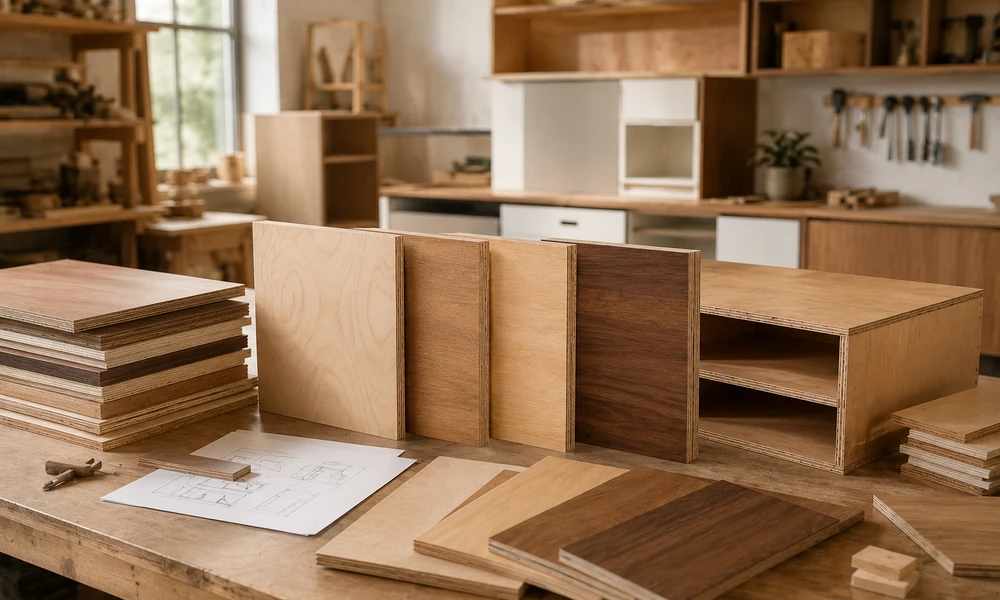
Custom furniture is made considering dimensions, storage needs, room conditions, and taste requirements. Therefore, every item has a different purpose, and so does the plywood used to make it. Plywood has a major influence on furniture’s strength, stability, appearance, and longevity. Making the right decision in the beginning makes manufacturing the product easier.
Consider the Furniture’s Purpose
The first thing you should do is decide where you want the furniture and what it is going to be used for. The usage of a wardrobe, cabinet, table, TV stand, or vanity can differ greatly.
You should consider the possible weight, how often this item is going to be used, if it is going to be exposed to moisture, how big it is and what additional things you plan to use with this furniture. Heavy items and pieces used very often will require stronger plywood than decorative furniture used from time to time.
Select the Right Plywood Grade
Different grades of plywood are suitable for different usage. Choosing plywood only because it is cheap or available might not be the right choice.
For certain dry uses in doors, plywood of MR grade can be a proper option. For places with a very humid environment, BWP plywood will be a better grade to choose. It is important to choose the right grade based on the environment and level of exposure.
Choose the Appropriate Thickness
Thickness is essential. Shelf design can vary for books, kitchenware, and heavier items, as cabinet backs and lightweight panels may not require the same thickness of plywood. It is important to remember the furniture dimensions, space between supports, and weight expectations prior to choosing. Trying to save money by choosing a thinner sheet can result in a compromise in stability.
Examine the Core Construction
Check the core design of the plywood being purchased. It will affect the performance of the piece, but it remains hidden once the furniture is built. The proper design ensures that the core contains properly bonded veneer layers without gaps.
Take a look at the plywood edges when shopping. The gaps indicate that the core has not been designed properly,y and the plywood will cause problems in cutting, drilling, and fastening.
Check the Surface Quality
Surface quality is also important for those who seek high-quality plywood intended forobtaining ae visible finish. Laminates and finishes need a proper surface quality to ensure that the plywood it will be applied to gives its best qualities.
Pay attention to the surface of the plywood, looking for cracks, rough zones, deep imperfections, or Kitchen cabinets, bathroom vanities, utility storage, and furniture adjacent to a plumbing installation are likely to be exposed to more humidity or water than furniture found in the bedroom or the living area.
Account for Moisture Exposure
Select the plywood grade depending on the amount of exposure. Edging is also important since the cut edges, joints, screw holes, and openings can serve as pathways to moisture.
Match Plywood With the Finish
You should also remember that the type of finish can influence your plywood choice. Furniture finished with laminate, veneer, paints, and polish should have a suitable substrate to support the desired appearance.
Think about how the surface will be treated and what kind of edges you will be able to see. The right plywood surface will simplify the process of finishing.
Consider Hardware and Joinery
When it comes to custom furniture, hardware such as hinges, drawer slides, handles, brackets, locks, etc. will often be used. Plywood must provide the required support during the use of the product.
When constructing the core, it is possible to make sure that the fasteners will be better. You must ensure that the type of joining and fastening is appropriate for your designs.
Check Product Specifications
Plywood selection can not be made exclusively on a surface-wise examination. Make sure that you have looked at the grade and thickness of plywood, its construction and intended use, as well as the kind of bonding features.
For instance, Royale Touche offers plywood varieties that are perfect for various interiors and allow homeowners, designers, and carpenters to compare and choose the right option.
Plan for Long-Term Performance
Custom furniture is made for a special room, so removing it will take time and effort. Therefore, you should choose the right variety of plywood in the first place, as it can help you avoid repair or replacement in the future.
It is necessary to analyse how often the item will be used, what conditions it will be exposed to, what load should be expected, etc.
Conclusion
The final choice of your plywood should consider several factors, as it is impossible to choose the right wood according only to its appearance or price. Consider factors such as plywood thickness, grade, core construction, surface, moisture exposure, and choice of hardware features.
