

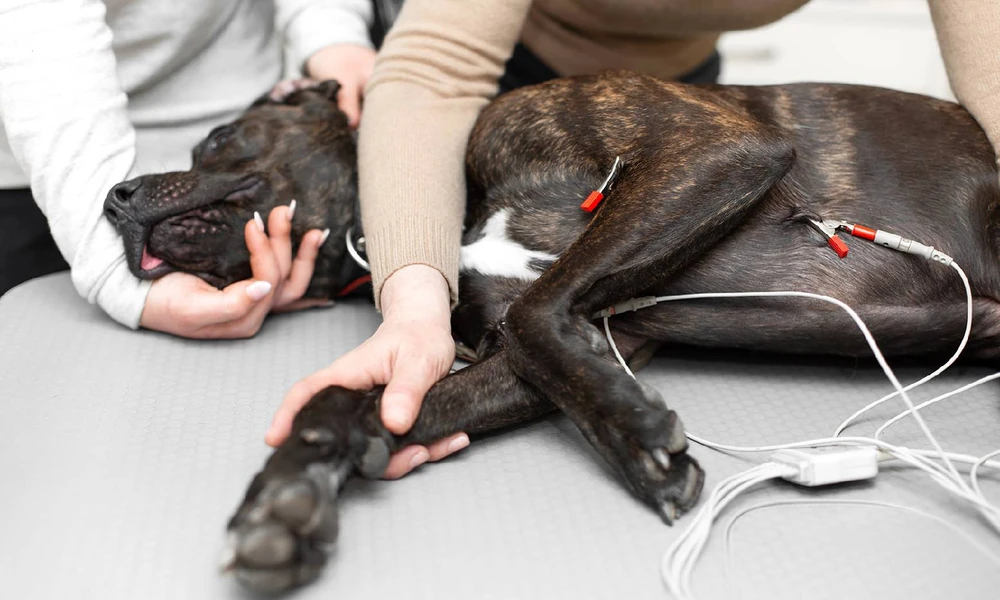
You notice something is off before anyone else does. Maybe your dog has brief spells of weakness, your cat seems to breathe harder after resting, or there was one frightening moment when your pet collapsed and then acted almost normal again. That kind of scare stays with you. When a pet has an unstable heart rhythm, the hardest part is that the problem can come and go, which means a normal exam or a short in-clinic tracing may miss what is really happening. That is why many families turn to experienced pet wellness veterinarians in Bedford for guidance and ongoing support.
That is why continuous ECG monitoring matters. It tracks the heart over time instead of capturing one short snapshot, and that gives your veterinary team a better chance of finding dangerous rhythm changes, linking them to symptoms, and deciding what treatment is safest. For many pets, especially those with fainting, weakness, rapid heartbeats, or known heart disease, continuous heart monitoring for pets can mean the difference between guessing and knowing.
Unstable pet arrhythmias can hide during a routine visit
An arrhythmia is an abnormal heart rhythm. Some are mild. Some can reduce blood flow to the brain and other organs, which is why a pet may wobble, collapse, or seem suddenly exhausted. Cornell’s cardiology service explains that arrhythmias in dogs can range from harmless extra beats to rhythms that need urgent care. The challenge is that these episodes do not always happen while your pet is standing on the exam table.
You might hear, “The ECG looked okay today,” and still know something is wrong at home. That disconnect is frustrating, and it is common. A short ECG records only a brief window. If the rhythm problem shows up during sleep, excitement, exercise, or random parts of the day, a quick test can miss it.
Unstable rhythms also do not all look the same. One pet may have bursts of very fast beats. Another may have pauses that are too long. Some pets alternate between normal rhythm and dangerous irregularity. Without longer monitoring, treatment can be less precise. A medication that helps one rhythm problem may worsen another, and that is not a small detail when your pet is already fragile.
Continuous ECG monitoring gives a clearer picture of what your pet’s heart is doing
Continuous ECG monitoring records the electrical activity of the heart over an extended period. That may happen in the hospital, where your pet is watched closely during an active crisis, or through ambulatory monitoring such as a Holter device worn during normal daily life. The goal is simple. Catch the rhythm as it actually behaves.
This matters when symptoms are intermittent. If your pet faints once every few days, a few seconds of in-clinic recording may tell you very little. A longer recording can show whether the collapse happened during a dangerous fast rhythm, a long pause, or something else entirely. That changes the next step. It can guide medication choices, help determine whether hospitalization is needed, and show whether treatment is working.
Virginia Tech’s cardiology service outlines how advanced diagnostic tools help evaluate heart disease and rhythm disorders in pets through a dedicated veterinary cardiology program. That kind of monitoring is not done just to gather more data. It is done because timing matters, pattern matters, and the right diagnosis protects your pet from both under-treatment and over-treatment.
Continuous ECG monitoring helps connect symptoms to real risk
A pet with an irregular heartbeat does not always look sick all the time. That can create a false sense of safety, especially after a normal afternoon at home. Then the episode happens again, often at night or when no one can get to the clinic right away. This is where ECG monitoring for pets with arrhythmias becomes so useful. It helps answer whether the rhythm is simply unusual or actively dangerous.
That distinction affects real decisions. If your pet is having frequent ventricular arrhythmias, your veterinarian may need to start antiarrhythmic medication, adjust current drugs, or recommend referral care. If the monitor shows only rare isolated beats and no link to symptoms, the plan may be more conservative. Either way, the goal is not to alarm you. It is to replace uncertainty with evidence.
There is also the financial side. Repeated emergency visits, repeated short ECGs, and trial-and-error medication changes can add up quickly. Longer monitoring may feel like a bigger step at first, but it can reduce wasted time and help your team move toward the right plan faster.
Short ECG snapshots and continuous monitoring answer different questions
| Monitoring Approach | What It Shows | Best Use | Main Limitation |
|---|---|---|---|
| Short in-clinic ECG | A brief snapshot of heart rhythm during the appointment | Immediate assessment when an arrhythmia is present in real time | Can miss intermittent rhythm problems |
| Continuous in-hospital ECG | Ongoing rhythm tracking over hours to days with medical supervision | Unstable patients, medication starts, active symptoms, ICU care | Reflects hospital conditions rather than normal home activity |
| Holter or ambulatory ECG | Extended recording during regular daily life | Fainting, episodic weakness, suspected hidden arrhythmias, treatment follow-up | Requires the device to stay in place and may not capture very rare events |
Three steps you can take right away if your pet may have an unstable rhythm
Track the episodes clearly. Write down when your pet coughs, collapses, seems weak, breathes harder, or acts disoriented. Note activity, duration, and recovery. A phone video can help your veterinarian compare symptoms with monitoring results.
Ask whether longer monitoring fits your pet’s pattern. If symptoms come and go, ask whether a short ECG is enough or whether pet cardiac monitoring over a longer period would give a better answer. This is especially useful after fainting episodes, unexplained weakness, or known heart disease.
Know when it is an emergency. Collapse, repeated fainting, severe weakness, pale gums, labored breathing, or a very fast or very slow heartbeat need prompt veterinary care. Do not wait for a scheduled recheck if your pet is actively struggling.
Clear answers can bring some relief
When your pet’s heart rhythm is unstable, the fear often comes from not knowing what will happen next. Continuous ECG monitoring does not erase that worry overnight, but it gives your veterinary team a much clearer view of the problem and a safer path forward. If your pet has had fainting, weakness, or an irregular heartbeat that does not show up consistently in the clinic, ask your Animal Hospital whether continuous monitoring is the next right step.
